Commercial Roof Repair
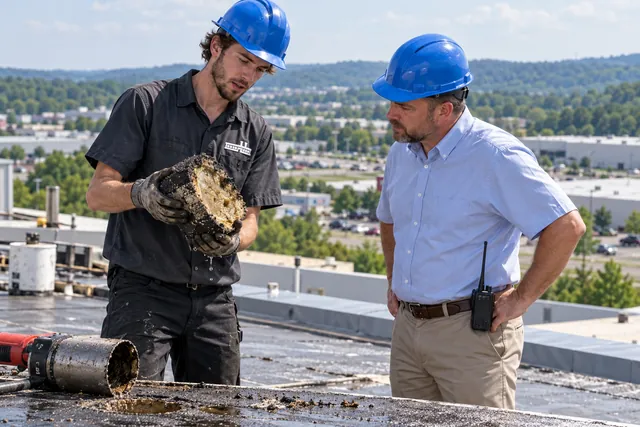
Leaks at seams, curbs, drains, and edge metal on any membrane or metal roof, traced to the source and fixed with matching material.
Commercial Roof Repair in Florence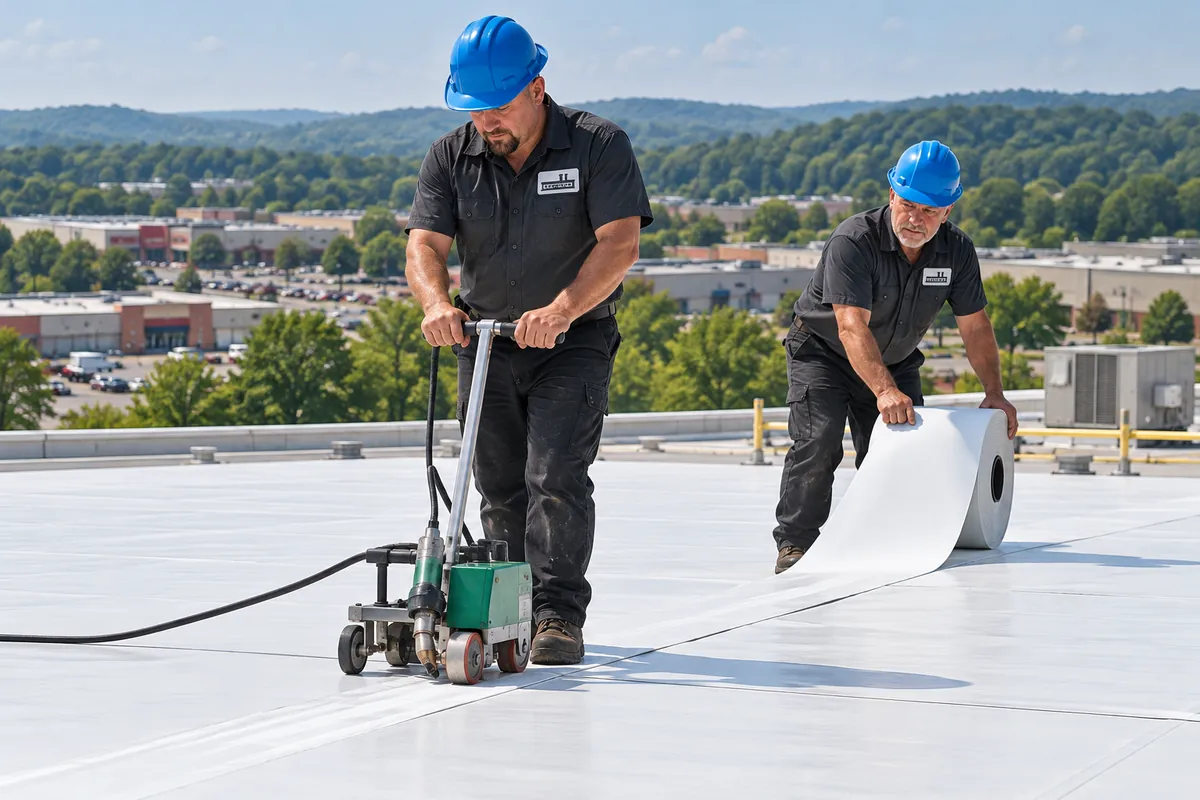
Commercial Roofing · Florence, KY
As a Florence commercial roofing contractor, we install, replace, and repair TPO, EPDM, flat, industrial, and metal roofs on business buildings.
Before a Florence commercial roofing contractor prices new work, the roof itself should answer this question. These are the conditions we sort a repair from a replacement by.
Most roof trouble shows up as one of these six conditions. The chip on each tells you how soon to act.
Water spots on ceiling tiles after a storm mean the leak has already passed the membrane, insulation, and deck. Tracing it while the stain is fresh keeps the search short.
Dirt rings that stay two days after rain mark low spots and slow drains. Standing water ages seams and adds weight, so clogged strainers and sagging deck areas come first.
Lifted laps on TPO or peeled seam tape on EPDM let wind-driven rain under the sheet. A probe along each seam finds the open spots before water soaks the insulation.
Edge metal that rattles in wind is where a membrane roof starts to peel. Refastening it early keeps a gust from tearing back a whole corner of the sheet.
Freeze-thaw cycles open the sealant joints at rooftop unit curbs, pipe boots, and counterflashing. These small gaps sit behind many low-slope roof leaks.
Brown streaks along end laps and screw rows on a metal roof show the finish on the steel has worn through. Caught early, new screws and resealed laps stop the spread.
Every service starts with the same roof walk. The cards explain what each one covers, and the table shows the buildings each system tends to suit.
Leaks at seams, curbs, drains, and edge metal on any membrane or metal roof, traced to the source and fixed with matching material.
Commercial Roof Repair in FlorenceWhite welded membrane for flat warehouse, retail, and office roofs, installed over tapered insulation so water runs to the drains.
TPO Roofing in Florence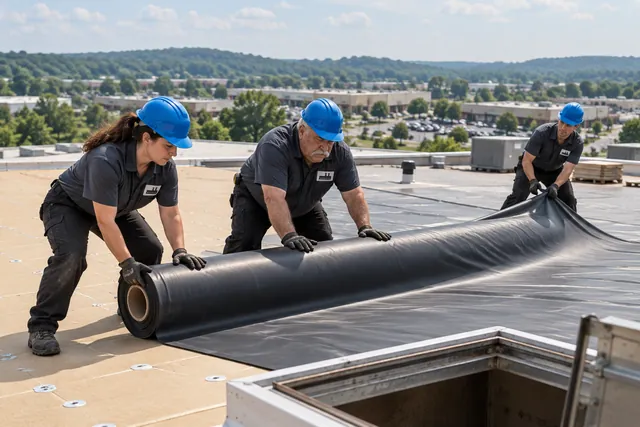
Black or white-on-black rubber sheets with taped seams, a common pick for older masonry buildings, schools, and churches.
EPDM Roofing in Florence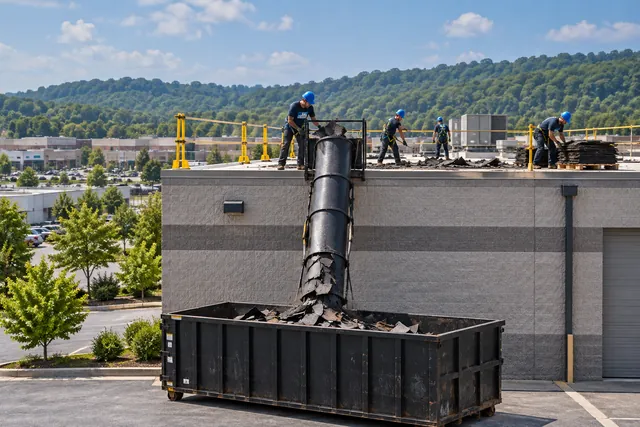
Replacement and recover work on any low-slope roof, from built-up and modified bitumen to single-ply, with drains rebuilt to the new height.
Flat Roofing in Florence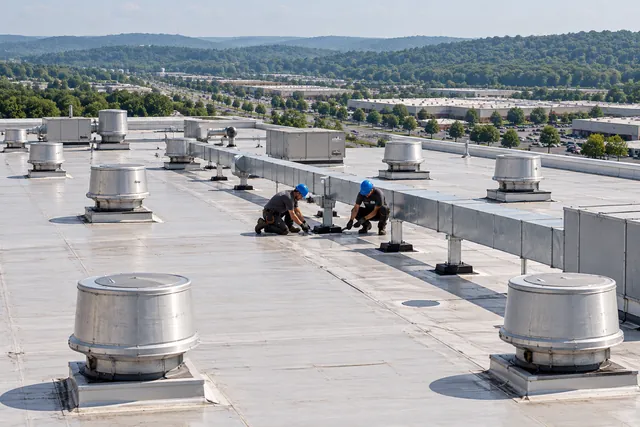
Plant and distribution roofs with exhaust fans, pipe racks, and expansion joints, roofed in sections while production keeps running.
Industrial Roofing in Florence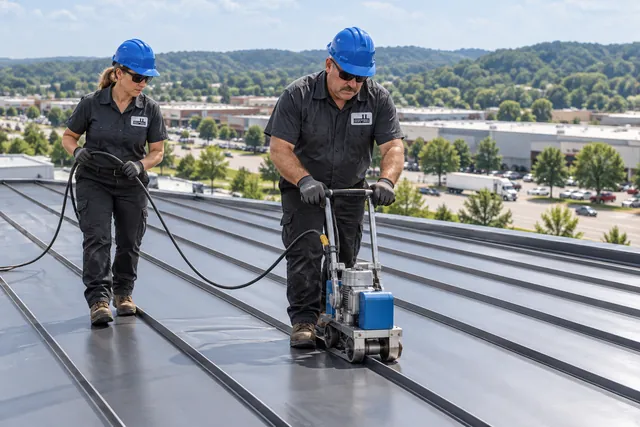
Standing seam and R-panel roofs installed, repaired, and maintained, including retrofit framing that sets a pitched metal roof over a leaking flat one.
Commercial Metal Roofing in Florence| Building | Roof Repair | TPO Roofing | EPDM Roofing | Flat Roofing | Industrial Roofing | Metal Roofing |
|---|---|---|---|---|---|---|
| Warehouses and distribution | Seams, drains, dock edges | Large flat fields | Long low-slope runs | Recover or tear-off | Phased by roof area | R-panel buildings |
| Retail and strip centers | Curb and parapet leaks | Clean roofs, few fans | Behind parapet walls | Drains and scuppers | Rarely | Storefront retrofit roofs |
| Offices and medical | Leaks over tenants | White roof, rooftop units | Older office roofs | Tapered layouts | Rarely | Standing seam roofs |
| Plants and process buildings | Exhaust zone damage | Away from oily exhaust | Low-traffic roof areas | Recover checks | Exhaust, joints, loads | Shop and process bays |
| Churches and schools | Wall and coping leaks | Rarely | Masonry walls, parapets | Built-up roof swaps | Rarely | Standing seam roofs |
| Shops and farm buildings | Screws and panel laps | Rarely | Rarely | Rarely | Rarely | R-panel and PBR |
Call and tell us where the stain is, how wide it has spread, and whether it shows up only in wind-driven rain.
Call UsFive stages, in the order they happen on your building. Select a stage to read what happens in it.
We walk the field, pull cores, and photograph every drain, curb, parapet cap, and run of edge metal. Inside, the underside of the deck gets checked for rust, rot, and stains that lead back to a roof leak.
Core samples and moisture readings decide this. Dry insulation and isolated failures mean repair. Wet boards across large areas, or two existing roof layers, move the roof toward tear-off and a new assembly.
Slope, drainage, rooftop traffic, and the work inside the building set the choice between TPO, EPDM, PVC, metal, or a mix. Grease or process exhaust can rule out one membrane near those fans.
Crane picks, dumpster spots, and material drops are placed away from doors and loading docks. Your HVAC contractor is booked to disconnect rooftop units, and tenants hear about noise and odors ahead of time.
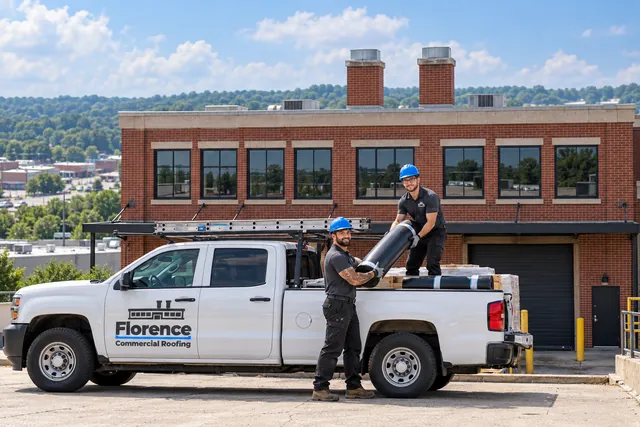
Crews open only the roof area they can seal before the day ends. Each section gets insulation, membrane or panels, and flashing, then a final walk checks seams, drains, and edges with you.
A finished roof changes three things: how the roof itself holds water out, what happens inside the building, and how you budget for the years after.
Welded TPO laps and primed EPDM tape hold through freeze-thaw movement, so water stays out of the insulation at the joints where older roofs fail first.
Tapered insulation and crickets at curbs push water to drains and scuppers, ending the ponding rings that age a flat roof early.
A sealed roof keeps water off inventory, ceiling tiles, and electrical gear, and the deck stops rusting from leaks that sat for seasons.
Replacing soaked boards restores the R-value that wet insulation lost, and a new assembly can add insulation where the energy code calls for it.
Once a worn system is replaced, roof costs move from calls after every storm to scheduled walks each spring and fall.
Core results, photos of every curb and drain, and the installed assembly go into your file for insurers, buyers, and your CPA.
Warehouses, plants, offices, and churches in these towns are where we do most of our commercial roofing. Building somewhere else? Call us or send us a message.
Retail centers, offices, and warehouses, with permits through the Boone County Building Department.
The county seat, where church, office, and shop roofs sit behind parapets that a thicker roof can outgrow.
Distribution and cargo buildings with long membrane runs, expansion joints, and drain grids.
Gallatin County buildings where low-slope and pitched roofs meet, with commercial permits through the state.
Short answers to the questions owners ask first. The full commercial roofing FAQ covers permits, codes, and each roof system.
Any roof over a business, plant, school, church, or farm building. Around Florence they fall into two families: low-slope membrane roofs that send water to interior drains or scuppers, and metal panel roofs that shed water down the ribs to a gutter. Both are built in layers: deck, insulation, waterproofing, flashing at walls and curbs, and edge metal.
Three signs point that way: wet insulation across large areas, failures at many seams and flashings at once, and new leaks every season despite repairs. A single leak at one curb is a repair job. An infrared or core moisture survey shows how much of the insulation is soaked before anyone prices a tear-off.
It becomes the better value once repair spending climbs each year and leaks keep reaching stock, equipment, or tenants. Wet insulation also loses R-value and adds weight to the deck. With dry insulation and one or two problem spots, repairs still make sense. Interior damage, downtime, and insurance terms belong in the comparison too.
A new occupant or use in a Florence building triggers a county building permit and a city fire inspection, according to the City of Florence. Owners often schedule the roof in the gap between tenants, while no stock sits below, which also lets the new tenant's rooftop units go onto fresh curbs flashed into the new membrane.
Yes. Crews open only the roof area they can seal before leaving each evening, protect the floor under any open deck, and keep cranes and dumpsters away from doors. Loud fastening into steel decks can move to evenings or weekends for offices and schools.
Roof age, any repair records, and a list of interior leak spots with the dates and weather when they showed up. Drawings with drain and rooftop unit locations help, and so does knowing where the hatch, ladder, or lift access sits.
Tell us about the roof, the building, and the leaks you have seen. We will set up a roof inspection and a free estimate.